


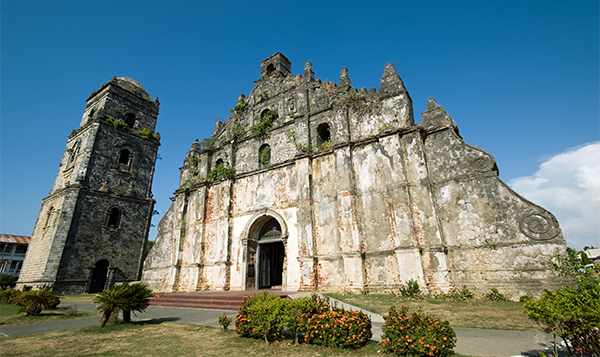
Header photo: One of the Philippines’ Baroque Churches, St. Augustine Church in Paoay, Ilocos Norte
The United Nations Educational, Scientific and Cultural Organization (UNESCO) World Heritage Convention identifies “places on earth of universal and outstanding value that should be part of the common heritage of humankind,” and the Philippines is grateful with the acknowledgement of the uniqueness of our terrain and aquatic resources, enabling the people to further protect our natural and cultural heritage. This month, we feature some of the country’s best of the best:
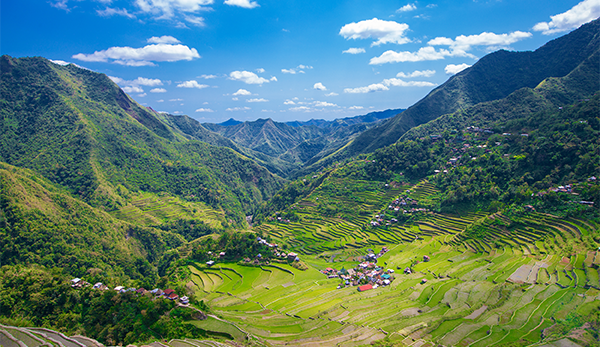
Rice Terraces of the Cordilleras
Contrary to popular belief, this land formation is not just one group of rice terraces that is listed in the conservation list, but five groups, hence the Rice Terraces of the Cordilleras. These are namely the Nagacadan Group of Rice Terraces in Kiangan, Hungduan Group of Rice Terraces, Mayoyao Central Group of Rice Terraces, Bangaan Group of Rice Terraces in Banaue, and the Batad Group of Rice Terraces in Banaue. These rice terraces are said to have evolved since pre-colonial times, extending over the vast land of the Cordilleras, across four municipalities. The rice terraces are the product of the Ifugao ethnic group that has occupied the mountains for thousands of years.
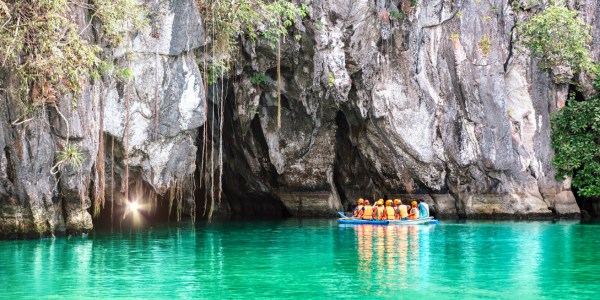
Puerto Princesa Subterranean River National Park
The Puerto Princesa Subterranean River National Park, as per UNESCO, is one of the most impressive cave systems in the world because of its beautiful limestone formations, unsullied forests, wildlife, and natural beauty. Located in the western portion of Palawan, the underground river flows directly into the sea, with a brackish portion due to the tides. The site is a complete ecosystem offering a habitat for biodiversity conservation and preservation. The usual tour along the subterranean river lasts for less than an hour, allowing one to completely marvel at the forest formations while being guided along the way.
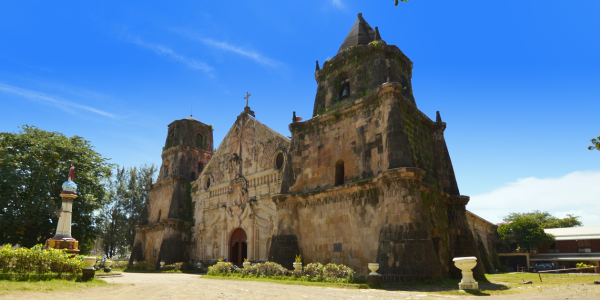
Baroque Churches of the Philippines
Built during the Spanish colonial period, the Philippines has four UNESCO churches that exemplifies the unique mix of culture– European Baroque in terms of architectural style and design, and built by Chinese and Filipino craftsmen. These churches are namely: The San Agustin Church of Paoay, commonly known as just Paoay Church, the Sta. Maria Church in Ilocos Sur, the San Agustin Church in Intramuros, Manila, and the Santo Tomas de Villanueva Church in Miag-ao, Iloilo. The churches are unique in terms of design as it was made to adapt the Philippine conditions, allowing the craftsmen to insert their interpretations of the Baroque style using local materials and decorative motifs. All churches feature fortress-like designs, and are made of either stone, brick, and lime.
Tubbataha Reefs Natural Park
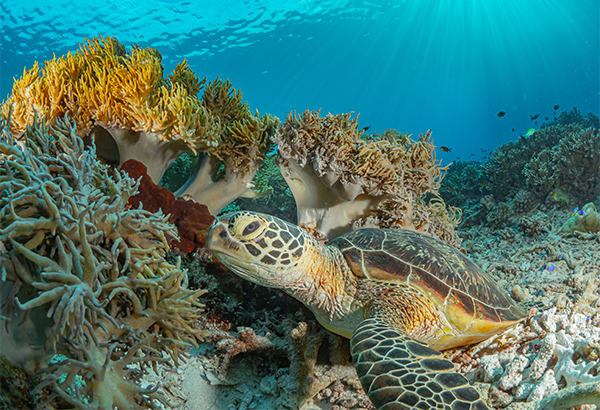
The Tubbataha Reefs Natural Park (TRNP) is the largest marine protected area (MPA) in the Philippines, allowing its location in the Sulu Sea to be a biodiversity hotspot. As the largest MPA, it enacts a strict no-take zone, where truly pictures are the only ones taken, and footprints are the only ones left. The reef supports over 360 species of coral and almost 700 species of fish. Scuba divers usually see dolphins, whales, sharks, turtles, and barracudas in the park. TRNP is an important habitat for internationally threatened and endangered marine species, allowing the site to have an ecological balance. The park also serves as a home to seabirds as it is one of the few remaining colonies that breeds in the region. A national internationally award-winning legislation allows the management of this site to efficiently administer regulations within the islets.
Vigan, Ilocos Sur
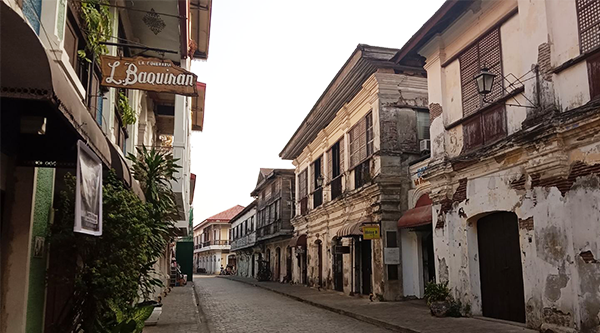
Established in the 16th century, Vigan in Ilocos Sur was an important trading spot before the colonial era. The architectural design of the buildings marry the elements of Philippine, Chinese, European, and Mexican designs, creating a unique townscape that’s truly Vigan. The plan of the town was according to the Laws of the Indies that new towns in the Spanish Empire had to follow. The landscape is grid-patterned, and the houses are characterized by being built with brick and wood, and its window panels are made out of Capiz shells. To date, most structures in Vigan have been converted to businesses such as accommodations, souvenir shops, or restaurants. The local government unit in Vigan also has enacted a policy that structures to be built in Vigan, especially those within the center, are to follow a certain design so as to preserve the heritage of the city.