



Only in the Philippines!
Ever travelled to the Philippines and wondered about some strange things done or spoken by the people? Or wanting to travel to the country and currently searching about what’s uniquely Filipino? Read on!
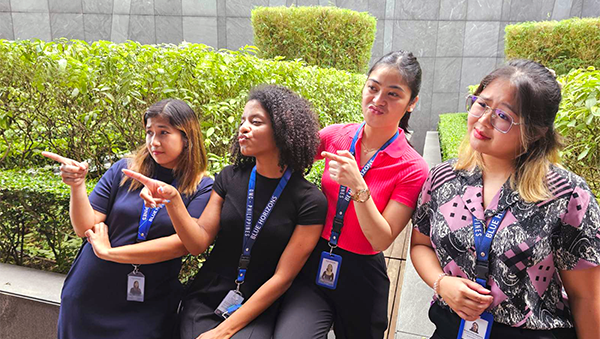
Pouting of lips as pointer
Peculiar as it may be, Filipinos point with their mouth. This may have stemmed from the taboo that pointing a finger is rude, much like in other countries and cultures. Some speculate that people point with their mouth as their hands are always full, for example, farmers who carry loads of produce in their hands. Whatever the origin may be, this gesture is truly one of the Filipino’s quirks.
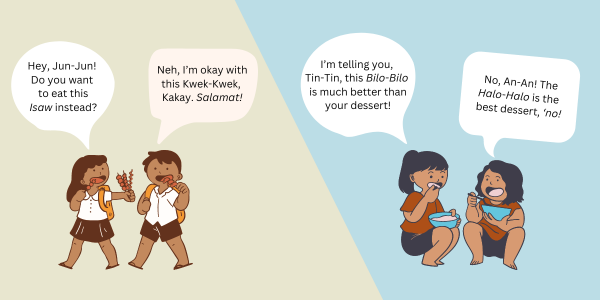
Word Reduplications
Word reduplications are common in linguistics and may be in different forms, whether monosyllabic, partial, or full. The Filipino language has countless words for this, but the well-known usage of reduplication in the language are on names. You may have heard of Jun-Jun which may have derived from a full name with John, or a shortened form of ‘junior.’ Another is An-An, from Ann or Anna, and Tin-Tin from Christine. Apart from names, reduplications are also common in Filipino food such as Halo-Halo (a Filipino dessert that is a mix of ice cream, beans, milk, banana, leche flan, and etc.), Kwek-Kwek (a Filipino snack which is an egg covered in an orange batter), and Bilo-Bilo (a Filipino dessert or snack made of glutinous rice balls drenched in coconut cream and sugar, and mixed with jackfruit and banana).
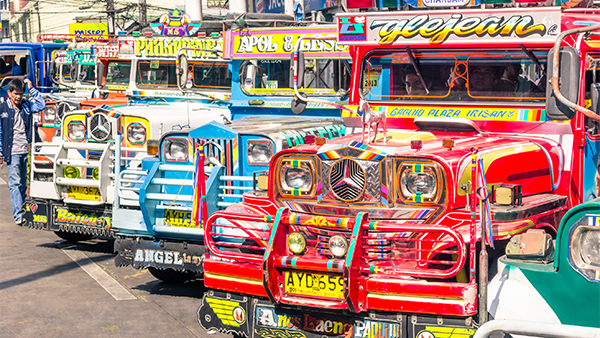
The Jeepney
When the American Troops left Willy Jeeps in the Philippines after World War II, the Filipinos repurposed the said vehicles into a public transport and have been around since then. An icon of Filipino culture, the jeepney is the King of the Road. Amidst the metal sheets that cover the vehicle’s body is the driver’s personality that shows in the jeepney’s make– the body adornments of a jeepney makes it more unique as it is said that no two jeepneys are alike. Albeit on the brink of phase out, the people are still striving to promote this Philippine feature that transports the most number of passengers daily.
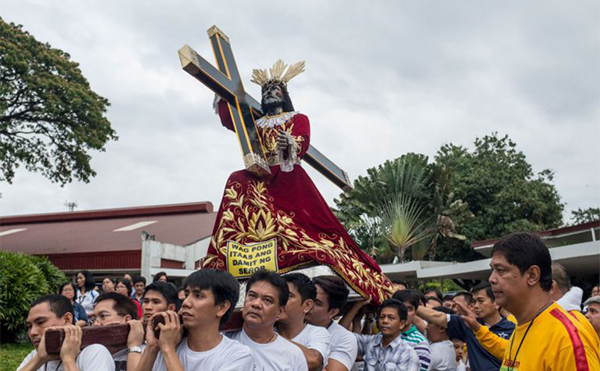
Photo retrieved from quiapochurch.com.ph
The Black Nazarene
The image of the Black Nazarene was brought to the Philippines by Augustinian Recollects in 1606. First situated in Luneta, it was transferred to Quiapo Church more than a century later due to the growing number of devotees. Although the image is not unique to the country, what’s unique is the devotion and tradition of the Filipino people to the Black Nazarene. During its feast every January 9, thousands of devotees gather from all over the Philippines and join in the Traslacion, or the procession of the image from Luneta to Quiapo. The “transfer” of the image represents two significant events; the commemoration of the Black Nazarene’s transfer from Luneta to Quiapo, and the suffering of Jesus Christ when He was carrying the cross to Mount Calvary. After almost 19-20 hours of spiritual passion, the devotees would usually flock to the image to throw cloths or to touch the image. To quote Quiapo Church’s former rector, “Our culture is a culture of touch and, significantly, in a way we want to touch heaven.”
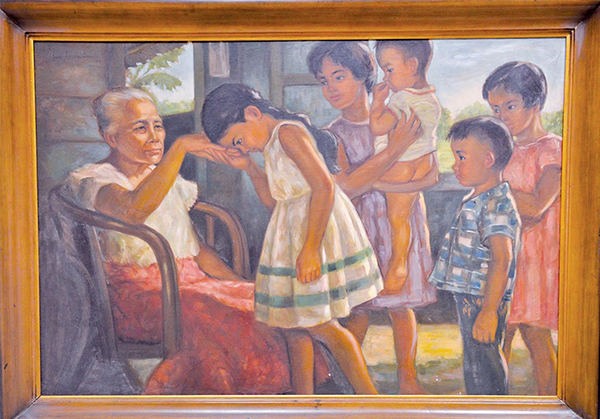
Photo retrieved from feu.edu.ph
Doing the Mano
Present in most Asian cultures, filial piety is also practiced in the Philippines, and the common example of this is the act of Pagmamano or when a younger person takes the hand of an older person and touches it to their forehead. This is commonly done when the younger person arrives home or after a Mass. This custom has been passed down to generations which strengthens familial bonds and communal respect.
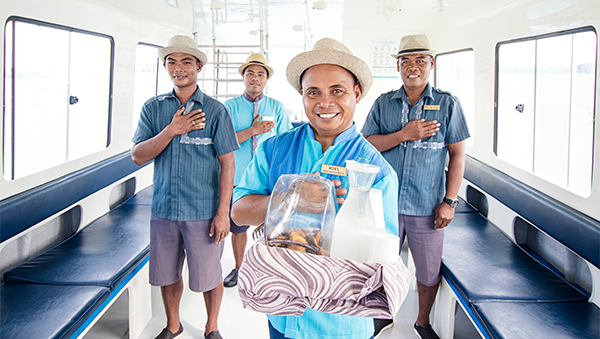
The Filipino Hospitality/Filipino Brand of Service
The Filipino Brand of Service is a formal term coined by the Philippines’ Ministry of Tourism, although the Philippines is known worldwide for the service brand which the tourism workforce has always been imbued with: hospitality. Filipinos are generally warm and friendly in nature; the people are almost always ready to assist, whether it be as simple as asking for directions or being a complete guide for a tour, hospitality is a pride of the country as it promotes cultural exchange, and fosters connection with tourists.
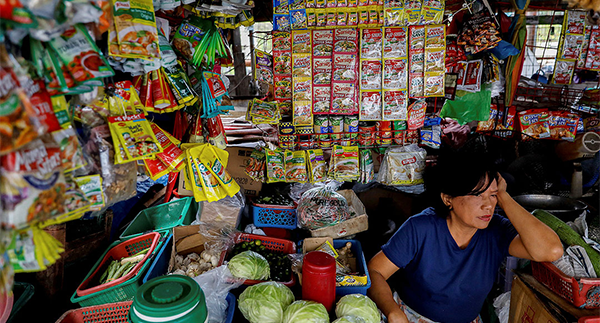
Photo from bworldonline.com
Tingi Cultures and the Sari-sari Stores
While other countries in the world buy in bulk, Filipinos buy in tingi. Tingi, or buying in exact or specific quantities allow the people to buy only what they need especially when saving money is a priority. This culture often amazes tourists as it’s not everyday that you can buy a stick of cigarette instead of one pack, a ¼ bottle of vinegar instead of a whole bottle, or a shampoo sachet instead of the whole one. Previously, people would go to a Sari-sari store (novelty store) and bring their own reusable container, but nowadays, corporations have taken advantage of this and have created plastic packaging for convenience. Some organizations have created a movement on placing refill systems on some sari-sari stores to allow people to refill from their containers.
The Dirty Ice Cream
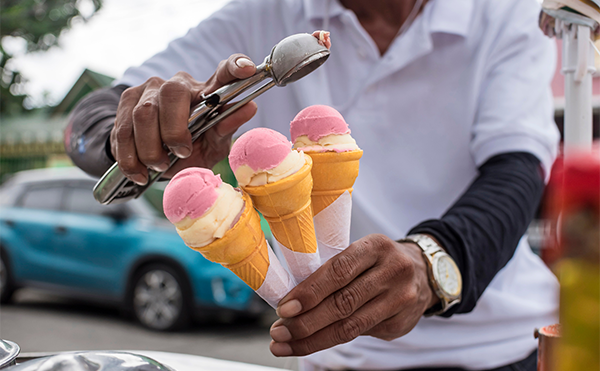
Dirty Ice Cream is always reminiscent of childhood memories in the Philippines, although it is always a favorite treat by all up to the present time. According to legend, Dirty Ice Cream was called as such as there was a Filipino nanny who was taking care of a foreign child and wanted an ice cream that’s sold on the street, since she has little money, she lied to the kid and told them instead that it’s dirty. Hence, the birth of the Dirty Ice Cream. In local terms, it’s also called Sorbetes. Usual flavors include Cheese, Ube, Mango, and Cookies and Cream. How do you know that there’s one nearby? Just listen for the bell.
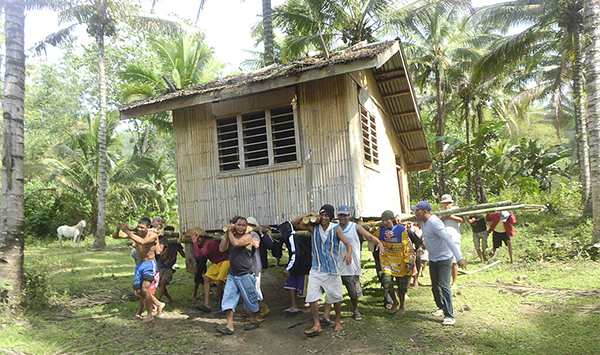
photo retrieved from Wikimedia Commons

Bayanihan
Bayanihan literally means “being like a town,” which translates to coordinating with each other and having a communal spirit. Formerly, it is the act of helping one’s neighbor when they will relocate since houses before can be carried by hand. Nowadays, bayanihan can be anything that requires community involvement like community pantries or kitchens, typhoon victim initiatives, and grassroots movements.
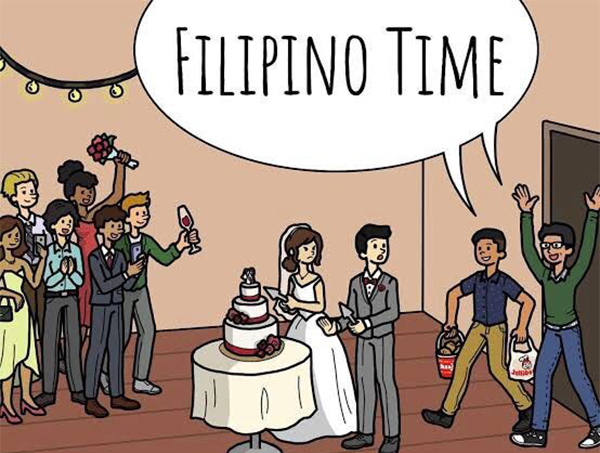
photo from medium.com
Filipino Time
Filipino Time refers to the habit of Filipinos being notoriously late; from being stuck in traffic, to suddenly meeting a friend, the excuses couldn’t seem to run out. The term though is a colonial construct which may have stemmed Filipino rich people’s practice of appearing fashionably late to an event. Contrary to popular belief, Filipinos strive to be early; they wake up early to catch the morning bus or jeepney, but traffic management is an everyday struggle.
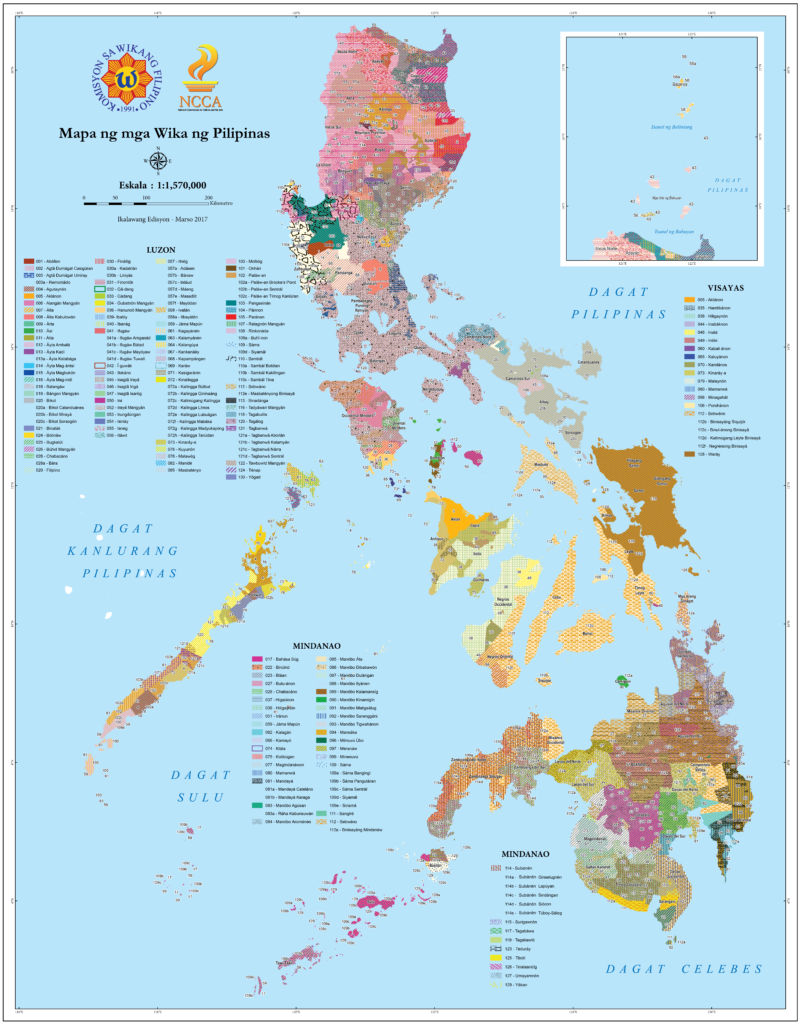
Photo from KWF – Komisyon sa Wikang Filipino – Republika ng Pilipinas – Tanggapan ng Pangulo(Commission on the Filipino Language – Republic of the Philippines – Office of the President), Public domain, via Wikimedia Commons
100+ Dialects, but 1 Common Language
The Philippines has almost 100+ languages and dialects, but the country is proud to have a common one: The English Language. It may not be new to some, but travelers find it somewhat easy to converse with a Filipino as almost all know how to speak English. This is due to the Filipinos’ adaptability and eagerness to convey a thought, which enables the people to be passionate about learning.
Minimum of 5 Meals Day
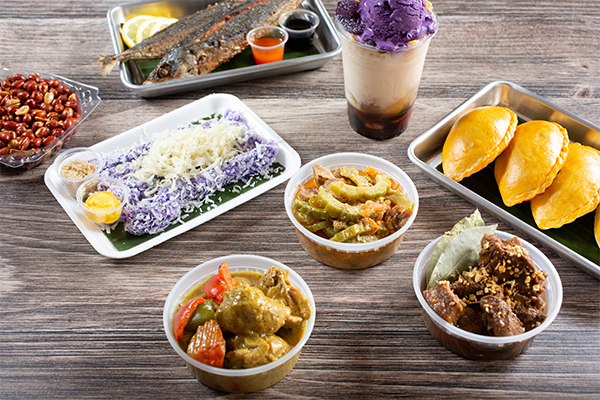
Some would wonder, how, while the Philippines is a third world country, can Filipinos afford to have more than three meals a day? This is a lingering question by most tourists, and also by fellow Filipinos. Food has always been a central part of the country’s culture. Whenever they meet, food would almost always be involved with the classic questions of “where to eat,” “what new coffee shop would you like to go to,” or “do you want to try this new restaurant that I saw?” If you get invited to a Filipino friend’s house, even if they don’t have much food to offer, they would still insist on offering some for you, which in a sense, is also part of the people’s hospitable nature. As food is one of the basic needs of a human, whenever a Filipino has money, it would most likely be budgeted for this use, hence, the reason why you would see people eating almost five meals a day.