


Nagsimula na ang Pasko! (Christmas Season has started!)
Ever been to the Philippines during the –ber months and asked yourself why Christmas decors are all around the corner already as early as September? Well then, you’re up for a treat!
Filipinos and their love for festivities
While most would say that Christmas season is celebrated longer in the Philippines due to the large number of Christian denominations in the country, we would like to add that the celebration is largely because of the Filipino’s love for festivities and family-centred values.
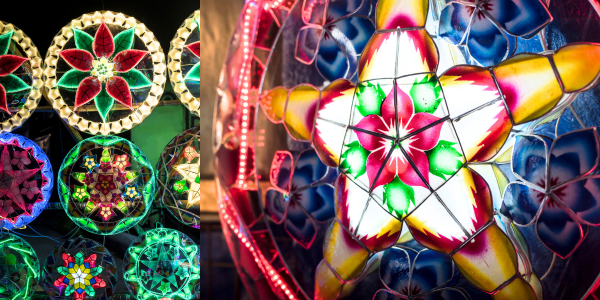
The Parol and the Giant Lantern Festival in the Philippines
The Parol is a traditional décor in the Philippines. It is said that parols originated as lanterns to light up village peoples’ ways when they would go to attend dawn masses. It is a star-shaped lantern that adorns houses during the Christmas season. To Filipinos, lighting up a parol means hope, and that there is always light in the dark. Building a parol is made traditionally with bamboo sticks and Japanese paper, with a candle inside. Nowadays, light bulbs or led lights serve as the lantern’s source of light. For a more authentic Filipino handicraft, some parols are made with capiz which are shells that emit beautiful translucent textures that serve as the parol’s panes.
It is almost impossible to talk about parols in the Philippines without talking about the Giant Lantern Festival in the city of San Fernando in Pampanga that is usually held every mid-December. Local and foreign tourists alike flock the said festival to witness the different lanterns made either traditionally or contemporarily. The Parols in the city can be as large as 18 feet in diameter; the lights in the lanterns are synced to a medley of Filipino songs, with the finale being the unveiling of what the lantern makers chose to be their main showcase of their presentation. The festival is usually participated in by the 8 to 10 villages from San Fernando City. The said city is also helmed as the lantern capital of the Philippines due to the industry that evolved from the Giant Lantern Festival.
How is the Christmas season celebrated in the Philippines?
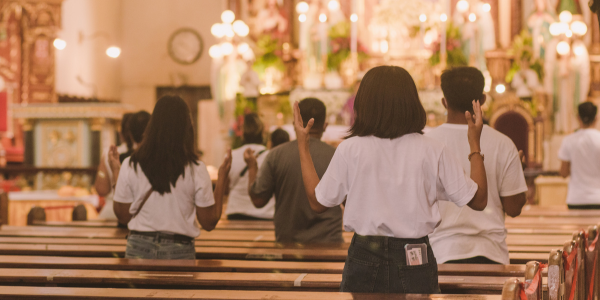
Simbang Gabi (Dawn Masses) – Uniquely a Filipino Catholic Christmas tradition, the Simbang Gabi is celebrated from December 16 to 24 of each year, or the nine days leading to Christmas Day. The masses usually start at 4 in the morning, although some churches also have anticipated masses which start from December 15 to 23.
Christmas Parties here and there – This season is usually the time when most Overseas Filipino Workers or OFWs go home to celebrate Christmas with their loved ones in the Philippines. Aside from family reunions, several Christmas parties are usually done by each individual. So if you’ve got a number of friends in the Philippines, adding to that your office colleagues, be prepared to be invited to several parties!
Christmas Carols – A tradition during this season is going Christmas caroling. In modern times, some would create concert events dubbed as caroling but this is traditionally done by going house to house in exchange for some cash. In earlier times, this was done in exchange for rice cakes.
Travelling – Although most would celebrate Christmas by going back to their hometowns, there is an increase in travel done by the locals both domestically and internationally during this season. This is because it is the most common time for everyone to be able to get a break or leave from work and school, hence, they go all in by travelling.
The Culture of “Aguinaldo” – Every Christmas season, children are given presents or money which is traditionally referred to as “aguinaldo,” which is akin to gift-giving. During Christmas Day, children would typically visit relatives and godparents to pay their respects. Once they enter the house, they would perform an honorary gesture called “pagmamano,” which is similar to hand-kissing; the greeter instead bows their head, takes the hand of the elderly person, and presses it towards their forehead.