


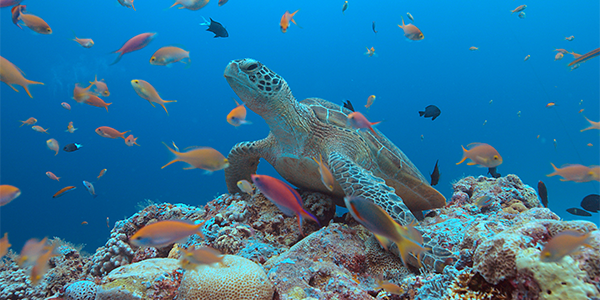
We remember this month the things that surround us– nature, the world that we live in, and also the smallest of us. We remember what’s innate in the world, and how we rely on it in the course of our daily lives. The Philippines has several natural wonders such as the Tubbataha Reefs in the Sulu Sea, and the Chocolate Hills, and in this issue, we feature those that we rely on for their natural beauty, ensuring that we only leave nothing but (reduced carbon) footprints.
Trekking – Sagada Echo Valley and Bangaan (Banaue) Rice Terraces
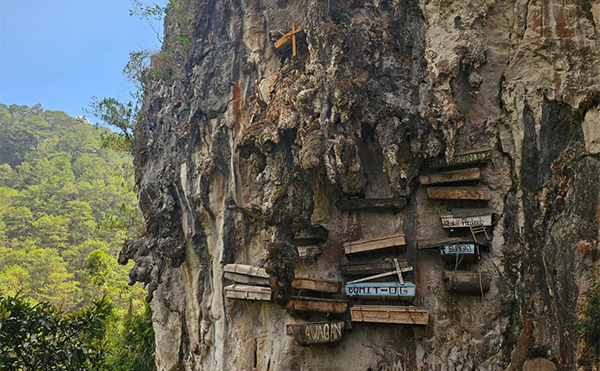
Known for the hanging coffins, the Sagada Echo Valley is one of the well-known sceneries in the Cordillera Region in the Philippines. The valley is characterized by the sharp cliffs, with its red trails against the vast amount of the green surroundings. The usual meet-up point is at the San Mario Cathedral, and from there, it will be a 15-20 minute trek from the top going downwards to the hanging coffins. It is said that when you shout from the top, and when the sound echoes, the dead are the ones shouting back at you. Although nowadays, shouting is no longer allowed so as to give respect to the dead.
Another cultural wonder, the Bangaan Rice Terraces in Banaue is a recommended trek for beginners. Drawing its name from “banga” or jar because of how it looks from a certain angle, this rice terraces is only 900-meters in elevation which makes it easier to trek that will last for about 20 to 30 minutes. Guests will be welcomed by the locals, and you will get to experience traditional rice pounding, or even plant some rice when the season is right, which is usually during the Philippine summer season.
Forest Bathing – Burauen, Leyte
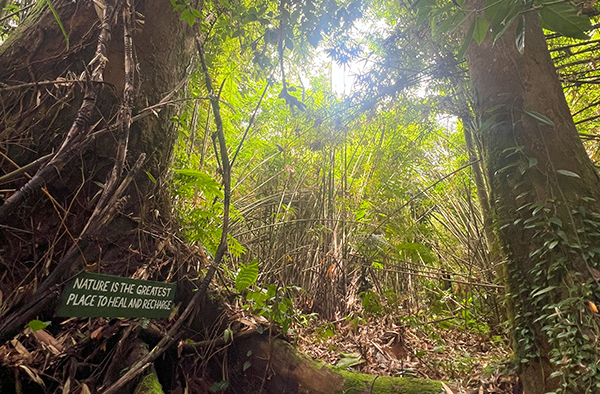
Popularized in Japan, Forest Bathing is one of the unique experiences that Buraen, Leyte offers. While the activity doesn’t literally expect one to take a bath in the forest, it has been called as such since one will be soaking in the environment of the forest, allowing oneself to be rejuvenated and grounded in nature, which we as humans are connected to. The 340 hectare-Mahagnao Volcano Natural Park (MVNP) offers 4 trails which may range from 45 mins to 2 hours, depending on the level of difficulty. The most beginner friendly is the Tanguile Trail which is named after the dipterocarp trees surrounding the area. The trail ends at Malagsum Lake– a green acidic water where species such as wild ducks thrive.
Caving – Sohoton Cave and Natural Bridge Bridge Park
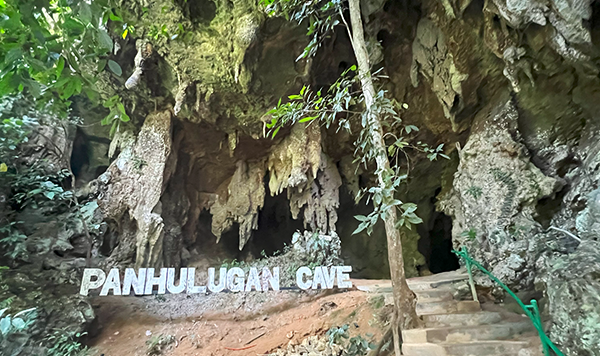
Not to be confused with Sohoton Cove in Siargao, the Sohoton Cave and Natural Bridge Park in Samar Island is an 840 hectare-protected natural area within the 450,000 hectares of Samar Island Natural Park. Laden with limestones that crosses over Kadak-an River, wildlives, and caves, the Sohoton Cave is the most famous in the park where a natural pool will welcome guests; one’s imagination will also be tested as the various formations inside the cave may take the shape of a person, an animal, a body part, and etc. Out of the 30 caves inside Sohoton, only the 560 meter-Panhulugan Cave is open to the public, which can be reached after 20 minutes of boat ride from the jump off area.
Scuba Diving – Ticao Island, Masbate, and Sogod Bay, Southern Leyte
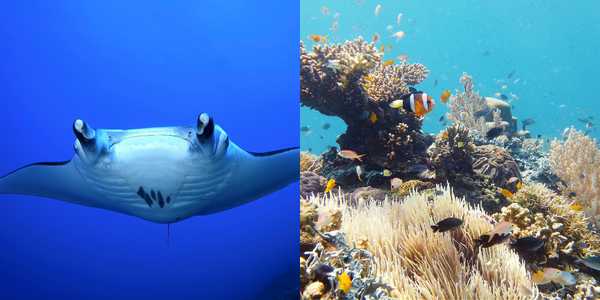
One of the three islands of Masbate Province in the Bicol Region, Ticao Island is a niche diving destination as divers flock here to see the Manta Bowl dive site. True to its name, the site boasts of giant Oceanic Manta Rays and Reef Manta Rays. If one’s lucky, Hammerheads and Whitetip Reef Sharks may also be seen in the Manta Bowl, as well as marine turtles, dolphins, and whales. A visit between the months of November and June will have more guarantee in seeing these giants as it is the time when the water is at its coolest, and is the time where the tidal currents create a good feeding season for the marine creatures in the site.
Another natural wonder great for scuba diving that dive aficionados should not miss is Sogod Bay in Southern Leyte. The dive destination has at least 22 spots teeming with rich marine life, ranging from corals to seahorses, to the occasional whale sharks. The site is also good for macro photography as the reefs around the bay houses a number of vertebrates and invertebrates such as the crowd favorite nudibranch. While most would prefer the months of December through April to go diving at Sogod Bay due to the whale shark season, April to June may provide a more favorable diving condition as December to April may bring in more rain.
Stand Up Paddle Board – Abatan River, Bohol
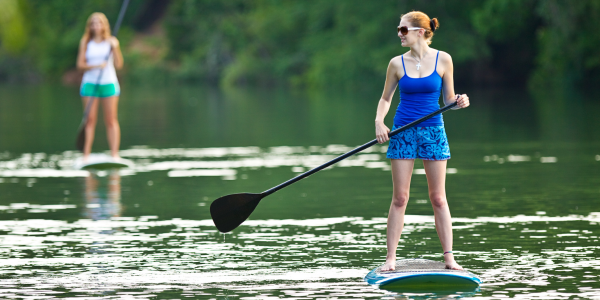
Located in the western part of Bohol, the Abatan river is one of the Philippines’ most diverse mangrove forests due to its coverage of a thousand hectares, with a number of mangrove species that still grows. The mangroves are still at risk as some part of the mangroves are being uprooted to be transformed into fish farms, which contaminates the water. Hopefully, the Stand Up Paddle Board tours in the river provides an education to the tourists which will allow them to vie for the conservation of Abatan. The usual route of the paddle will start from a waterfall going downstream in the river. The river traverses through Antequera, Balilihan, Maribojoc, until the estuary at Cortes.